accounting – Fiscal Artisans

April 2, 2025

In this post, we explain the processses regarding your quarterly BAS lodgements, the due dates, and how we would like to interact with you to get your BAS returns done, and keep you up to date with your regular lodgements.

Please watch the enclosed video and feel free to contact us regarding your obligations and how we can assist you.


April 2, 2025

Presented by Mr Stuart Smith, Director Fiscal Artisans

A review of the 2025 Australian Federal Budget

Key changes:

New tax cuts for individual taxpayers in 2027 and 2028 

Increased Medicare levy low-income thresholds

Making student loans fairer

Energy bill relief

Expansion to Help to Buy scheme for first home buyers

Restricting Foreign Ownership of Housing

Support for the Hospitality Sector and Alcohol Producers

Banning non-compete clauses for low and middle income workers

Healthcare

Skills and Education

Instant asset write-off changes 

Click on the video below:


June 7, 2023

As a creative artist, your focus is on making the best use of your talents and skills, and turning this into a viable, income-earning activity.

And sometimes, this means that your income and cash flow are ‘lumpy’, with periods of low or no income, followed by ‘the great years’. Years of effort, that result in a large cash payment in one year – and a large tax bill as a result.

For this reason, it’s important that you can understand the concept of Income Averaging. This tax treatment offers significant concessions, and knowing how to make the most of them can save you a lot of money.

It is ok if you are not familiar with this particular area of taxation, we’re here to help. This is a highly specialised field that only a select few have expertise in. Many accountants, unless they have a specific focus on creative industries, may not be aware of it. Moreover, if you typically handle your tax returns on your own, it is improbable that this benefit has come to your attention. This is why you need to utilise an accountant that understands and specialises in the creative industries (as Fiscal Artisans does!) to assist you in your accounting and taxation matters.

Here’s how it works: your Special Professional income from creative sources (such as writing, performing, or inventing) is isolated and taxed at a concessional or reduced rate based on a rolling 5-year average. This means you pay less tax in years where your income from these sources is significantly above average. In years where your income is below or in line with your average, you are taxed at normal marginal tax rates. Keep in mind that income from other sources is always taxed at normal rates, and income averaging may not benefit you in years where your income is below average. However, years of lower income will affect your rolling average, and reduce your tax rate in future periods when you earn above-average income.

To qualify for income averaging, you must be classified as a “Special Professional.” This encompasses authors, artists, composers, inventors, performers, production associates, and sportspersons. In some cases depending on the circumstances, you may be designated as such if you are in a “creative decision-making role” such as a director. Eligibility is assessed on a case-by-case basis, so it’s wise to seek advice from a knowledgeable tax professional to determine if you meet the criteria.

One of the reasons these jobs are included in income averaging is due to the inconsistent nature of income. For example, a composer may spend years developing a project before receiving any income, resulting in large peaks and troughs of income year to year. Income averaging helps to spread this income over the entire development process, resulting in lower overall tax payments.

In simple terms, Income Averaging allows you to smooth out your taxable income over a few years, minimising the impact of any one high-earning period. By doing so, you can reduce your overall tax liability and free up funds to invest back into your creative pursuits.

In the first 4 years, the benefit can be even greater! It is quite common for the first year of averaging to result in little or no tax needing to be paid – at least on the earnings up to $90,000 (assuming no other income has been earned on salary from areas like school teaching, waiting tables or other non-artistic employment)

Keep in mind that income averaging is an opt-in system, and once you opt-in, you remain in the system. You can start using income averaging once you’ve earned more than $2,500 from creative work, and it only considers the income generated from creative activities to calculate your average. Other income, such as non-creative activities or investments, is not included.

Ok, you say, so what sort of benefit can this provide?

Case Study 1

Brian Eno(1) is a successful composer, musician and recording artist. They have a stream of income coming from local and international royalties from Film and TV compositions, Gigs and CD sales annually, as well as investment and non-Artist income.

In 2021, they lodged their Income tax return without claiming Artist Averaging, as they had done in all prior years of their career.

On a total taxable income (after all deduction claims) of $219,830, they incurred a total tax liability of $67,399.81. After the tax instalments were paid through the year, they were left with a net tax liability of $12,236.30.

However, on review of their return, and implementing Artist Averaging on their Professional Income, the Total Tax payable was reduced to $21,746.80, resulting in a net benefit of $45,653 to the Artist.

This also subsequently reduced the amount of PAYG tax instalments that were needed for the following tax year.

Case Study 2

Mariah Carey(1) is a professional writer.

On their Tax year professional income of $91,500, and a net taxable income (after all deductions, and including non-business income) they paid tax on a Taxable income of $57,746.

Before using the Artist Averaging provisions, they are liable for tax totalling $9,460.65.

Artist Averaging was then applied to this return, and with the provisions for the first year of averaging, their total tax liability was reduced to $1,154.92 – a saving of $8,305.73 on the same taxable income.

It’s important to remember that you cannot opt-out of income averaging once your income normalises. Also, the concession only applies in “good” years – you will not be taxed more in years where you earn less than the rolling average.

I.e. if your income has been consistently around $80,000 p.a. but then drops in one year to under $40,000, you will pay the ‘standard’ tax you would normally pay on $40,000 for that year. Subsequently, if the following year jumps up to $120,000 (as the project you have been working on is completed and you are paid a lump sum on completion, or the unit sales happen in the following year) then Artist Averaging may reduce the tax payable on the amount ‘over’ $80,000, so your tax rate payable does not jump up significantly.

To show how this works over the years, let’s consider the following case study.

Freddy McQueen, the lead singer of a hard rock band called Mercury, has income over a 5 year period that has ebbed and flowed as CD sales, royalties, writing and recording over new material and concerts were undertaken.

His Net taxable income after all costs and deductions are as follows:

Year 1 – $50,000

Year 2 – $75,000

Year 3 – $120,000

Year 4 – $40,000

Year 5 – $130,000

The tax payable – with and without Artist Averaging over this period would look like this:

1 2 3 4 5
Taxable income  $50,000.00  $75,000.00  $120,000.00  $40,000.00  $130,000.00
Tax on normal rates  $6,717.00  $14,842.00  $29,467.00  $4,142.00  $33,167.00
Tax on averaging  $    –  $9,625.40  $22,042.00  $4,142.00  $32,717.00
Net Tax Benefit / Savings  $6,717.00  $5,216.60  $7,425.00  $                 –    $450.00

Income averaging is a specialised area of taxation that can be incredibly advantageous for those in creative professions. However, it’s crucial to enlist the help of a tax professional like Fiscal Artisans to determine eligibility and maximise benefits.

Talk to us for further information, and let’s see if Income Averaging applies to you.

We may even be able to look at your past tax returns and reclaim tax that you may have overpaid. Contact us for further information and a review of your past tax lodgements.

Stuart C Smith CPA

Director

Fiscal Artisans


  1. Of course, these are not their real names. The facts in the first two case studies are real, but the names have been changed to maintain confidentiality.
  2. Note that the tax payable amounts do not include the Medicare levy and other related offsets.
  3. As the Income for the year is below the average over the prior years, there is no rebate claimable for the year, but also, no additional tax is payable on Total Taxable Income.

April 13, 2023

April Update from Fiscal Artisans

We hope this update finds you well and in high spirits!

We’ve been working hard behind the scenes to make sure our clients are always on top of their financial game. With tax season approaching, it’s the perfect time to reflect on the goals we set at the beginning of the year and assess how we’ve progressed.

Our Team Members – get to know the people behind Fiscal Artisans.

At Fiscal Artisans, we believe that our team members are our most valuable asset. That’s why we’re excited to introduce you to the people behind our financial services. They’re diverse, each bringing their unique skills, experiences, and personalities to the table. From our friendly customer service reps to our highly skilled accountants, every team member is dedicated to providing excellent service and helping our clients achieve their financial goals. We take pride in the fact that our team is not only highly competent but also warm and approachable. So the next time you call or visit our offices, you can feel confident that you’re in good hands with our team of Fiscal Artisans.

Kate Boden – VA

We are excited to introduce Kate Boden, our new VA extraordinaire! With her extensive experience in both administrative and customer service roles, we are certain that Kate will be an invaluable asset to our team. Her attention to detail, strong organisational skills, and ability to multitask will ensure our operations run smoothly and efficiently. Not only does Kate bring valuable skills to the table, but her positive attitude and friendly demeanour make her a pleasure to work with. We are thrilled to have her on board and can’t wait to see all she will accomplish in her new role. Welcome to the team, Kate!

To email Kate for any of your requirements from us, click below

email Kate at Fiscal Artisans


Manish Kalani – Client Manager.

G’day everyone! It’s great to have Manish Kalani back in Oz after a decade away. Manish is returning with his family and embarking on a new chapter, Down Under. For those who don’t know, Manish has been an integral part of Fiscal Artisans since the beginning, churning out the financial nitty-gritty that keeps our operation ticking. But it’s not just about crunching numbers for Manish – he’s excited to get acquainted with everyone and get to know everyone on a more personal level. So welcome back, Manish, and all the best for this exciting new phase in your Aussie adventure!

Email Manish

Tax Planning sessions in April, May, & June

Are you looking to stay ahead of your taxes this year? Look no further than our Tax Planning sessions, held throughout April, May, and June. Our professional team of experts will guide you through the latest tax laws and regulations, providing you with the tools and knowledge needed to minimise your tax bill and maximise your returns. From individual tax planning to corporate tax strategies, our sessions cover it all. Don’t wait until the last minute; book your spot today and make tax season a breeze.

We will be contacting our business clients with a suggested date for our tax planning meeting, but you can also contact Kate at admin@fiscalartisans.com.au or 0400 338 501 to book an appointment. Or go to our appointment booking page for more information and to book in.

Events & Activities – Property Investment Seminar May 3, at 6:30 pm

Are you interested in investing in property and expanding your financial portfolio? Look no further than our upcoming Property Investment Seminar! Hosted by industry experts and seasoned investors, our seminar will equip you with the knowledge and skills necessary to make informed decisions and achieve financial success. We believe that anyone can achieve financial freedom through property investment, and our warm and supportive community will be with you every step of the way. Don’t miss this opportunity to grow your wealth and build a brighter future. Join us at the Property Investment Seminar and take the first step towards securing your financial future.

For more information, please go to: Property Investment Seminar.

We are looking at recording the session for our interstate clients and will have the video available to watch in the forthcoming weeks.

Walking & working with you

Managing finances can be overwhelming in the current economic climate – but having the right team of professionals to help you create a plan and prioritize your objectives is invaluable.

With Fiscal Artisans’ team of experts, you can rest assured that your finances are being managed with utmost care and precision throughout every step of the process. We understand our clients come from different backgrounds – whether you are looking to establish investments or reduce your debt – we will work with you to create an effective action plan!

Be sure to reach out for help so we can provide you with comprehensive solutions for your financial well-being. Take the initiative now – pick up the phone and call us for an appointment: let us help you truly make a difference in these economically trying times.


October 4, 2022
Article-Images-12.png?fit=500%2C500&ssl=1

The Reserve Bank of Australia (RBA) has hiked the official cash rate by another 25 basis points to 2.60%. How will this rate hike impact your monthly mortgage repayments, and when will it happen?

At the beginning of May, the cash rate was just 0.10%. Today it increased for the sixth straight month to 2.60%.

It’s worth noting that the cash rate hasn’t been this high since July 2013, almost ten years ago.

The speed at which the increases have occurred has stressed many. And there are concerns about when it will stop. In reality, the Reserve Bank has probably been too slow, started acting too late, and may keep the rates going too long and then find themselves having to reduce rates sooner than planned.

 The time to have started altering the cash rate was probably around July 2021, with small – 0.1 to 0.15% increases perhaps every 1 or 2 months – to cool the market before inflation took off. We don’t know whether there was economic or political pressure to avoid taking action, but we now have an overheated economy struggling to cope with the internal and external pressures evident daily in the news and the financial results personally, locally and globally.

We face further rate rises – perhaps taking the target cash rate to around 4% (a further 1.5% over the next few months) with maybe a pause for 3 – 4 months in 2023 before further ‘adjustments’ become necessary – that could go in either direction. The fact that this was a 25-point rise instead of another 50-point rise points to a possible easing by the RBA as they approach their desired ceiling. Inflation numbers will be key in the coming months – as will GDP and growth numbers. And the October Federal Budget could be a game changer. No pressure on the Treasurer at all!

RBA Governor Philip Lowe said that further increases were likely over the period ahead.

“The cash rate has been increased substantially in a short period of time. Reflecting this, the (RBA) board decided to increase the cash rate by 25 basis points this month as it assesses the outlook for inflation and economic growth in Australia,” said Governor Lowe.

How much extra will your mortgage be each month?

Unless you’re on a fixed-rate mortgage, the banks will likely follow the RBA’s lead and increase the interest rate on your variable home loan soon.

Let’s say you’re an owner-occupier with a 25-year loan of $500,000, paying principal and interest.

This month’s 25 basis point increase means your monthly repayments could increase by almost $75 monthly. That’s an extra $685 on your mortgage compared to May 1.

If you have a $750,000 loan, repayments will likely increase by about $110 monthly, up $1030 from May 1.

Meanwhile, a $1 million loan will increase almost $150 a month, up $1,380 from May 1.

So when exactly will this latest rate rise kick in?

When the RBA hikes the official cash rate, your bank will usually announce its own interest rate hike (and have its own notice period) for variable rates in the following days.

Let’s run through a quick example.

Assuming your monthly mortgage repayments are made on the 20th day of each month.

Let’s also assume you receive a notice from your lender this Friday (October 7) of their own subsequent rate increase, with a 30-day notice period.

By the time October 20 arrives, you won’t be paying higher repayments, as the full 30 days notice would not have passed.

When that 30-day notice finishes on November 6, the daily interest rate you’re charged will increase to the new amount.

That means when your monthly repayment on November 20 rolls around, you’d be charged at the new, higher rate (but calculated only from November 6).

By the time December 20 arrives, the monthly repayment amount you’re charged will fully reflect the new rate.

Some options we can help you explore include refinancing (which could include increasing the length of your loan to decrease monthly repayments), debt consolidation, or building up a bit of a buffer in an offset account ahead of more rate hikes.

If you’re worried about how you’ll meet your repayments in the months ahead, give us a call today. We can work with our associates and look at getting you the best deals on the market – even with your existing bank!

To start that process – and get a clear picture as to what your numbers look like – grab our fact finder at Fiscal Artisans Fact Finder


September 9, 2022
rishabh-varshney-bt41lw9i6Kc-unsplash.jpg?fit=1200%2C801&ssl=1

Online, real-time tax time? Big Brother WILL be watching you!

In the attached article is a rundown of the speech given by the ATO commissioner Chris Jordan at the Xerocon 2022 conference in Sydney this week.

The ATO is looking to have a fully digitised, online and REAL TIME payment of tax happening.

And they want this to happen by 2030.

What does this mean to you in business?

It could mean that the ATO will be looking to receive tax payments like GST and PAYG when the transactions occur – online, in real-time.

“If digital systems can bring together point-of-sale, banking and e-invoicing data at the time of purchase or sale, can their systems report the GST paid or collected to the ATO in real-time too?”

I have seen Stripe payments reported for sole traders on the ATO prefill reports as a separate source of income, so the reality is that they are well on the way towards having all the data on hand in real-time. With STP and online payroll systems, it is currently a ‘one-button press’ for regular payroll reporting.

The next phase will clearly be for automatic payroll reporting when the pay run has been finalised. Then perhaps the following stage will be an automatic drawdown of the PAYG and superannuation payments that are due, as each pay occurs.

Or as an ‘automatic drawdown’ on a set date each month, without any paperwork being prepared and lodged with payments following up later.

 What do you need to do as a business owner to prepare for this?

 Talk to your accountant – or get one if you don’t have one already.

And get your systems in place to ensure you know how your business is going, how strong your cash flow is over the months ahead, and make sure your plans and projections are in place.

Ensure that your payment and receivable systems are working properly and that your invoices are being paid regularly. Are you managing this yourself? Do you need support, and perhaps professional management of this?

Work with your accountant and bank to get the right support – overdrafts, credit limits etc. to manage your cash flow requirements.

For accountants, the focus will be far less on ‘churn and turn’ preparation of annual tax returns, where they provide a low cost, quick process, and high volume (and probably no advice) service. Instead, accountants will need to be focused on helping businesses manage their operations, grow their businesses, and adhere to their financial obligations.

Your accountant should be your business partner, that can help you:

 Go Beyond The Numbers.

To discuss this, and to look at how we can help you grow your business contact us at 0409788399 or at info@fiscalartisans.com.au
https://www.accountantsdaily.com.au/tax-compliance/17528-ato-boss-outlines-future-where-tax-just-happens?utm_source=Accountants%20Daily&utm_campaign=09_09_22&utm_medium=email&utm_content=1&utm_emailID=0152c813751e62c04826246784c2c4b59a95398a1940f069dae8bb75abc624b3


← Back

Thank you for your response. ✨


November 12, 2021
immo-wegmann-5PqBCWUtYbo-unsplash.jpg?fit=1200%2C795&ssl=1

The Federal government has now set up an identification system for all company directors in Australia. 

Like your Tax File Number or an ABN, it is a unique identifier used with all entities in which a person holds a director’s position. i.e. the number is ‘attached’ to the person, not the company.

 The intention is that this system helps to deal with false directorships or fraudulent director identities. It will also deal with the common situation of multiple names being used for an individual (such as middle names being included or excluded with different directorships. 

The number itself is a 15 digit code that adheres to international standard ISO 3166. All Australian Directors will have a number that starts with ‘036’, followed by an 11 digit unique number and a ‘check digit’ that is used to determine the validity of the number being used (This is similar to the TFN and ABN numbers in terms of validity checking)

As of November 1, 2021, everyone who was a director has until November 30, 2022, to apply for a Director ID. Anyone who becomes a company director for the first time between November 1, 2021, and April 4, 2022 must obtain a director ID within 28 days of their appointment. You MUST have a Director ID after April 4, 2022, before you are appointed to your first company director position.

Ok, so what do you need to do to get a Directors ID? It’s simple. 

  1. Register your details with MyGovID. You may have done this already to get your vaccination certificate, medicare details or tax information If not, you will need to supply various ID documents to verify yourself (such as drivers licence, passport, medicare details etc
  2. Apply for the Director ID via MyGovID.

To make the process easier, I will be sending all current directors on our corporate register system an email with the details of all the companies they are associated with and the direct links to apply for a Director ID. (Note that this includes companies that are solely trustees of trusts or superannuation funds.) It will generally only take a few minutes for you to complete the process.

When you have your Directors ID, could you please forward the details to me so that I can record them in our system? This way, it will ensure that the details appear on your company’s documents as required in the future.

If you have any questions or need more information on setting up your Directors ID, please feel free to contact us!


October 21, 2021
zq-lee-Q6H4SwjsAdI-unsplash.jpg?fit=1200%2C800&ssl=1

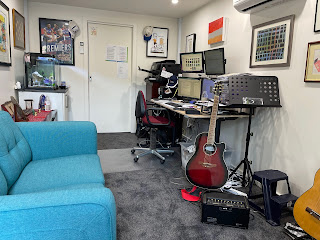
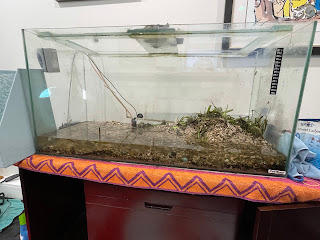
Those of you who have been to my office, or perhaps seen the background on our Zoom chats, will know that I have a fish tank just behind my desk.

Freshwater Tropical Fish. They are relaxing to watch and provide a nice vista in the room.

Watching the freshwater mussel wander around the tank is fascinating!  (Who knew they moved around so much?)
Anyone who has kept an aquarium knows that regular maintenance is needed. Clean the tank, the filters, test and change a portion of the water. Feed the fish (of course!), re-vegetate or decorate the tank. And at times, deal with illnesses, or restock the tank.
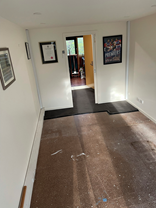
A few weeks ago, after doing a water change in an evening, I came into the office the following morning to find a disaster had occurred. 
The oxygen pipe – which ‘bubbles’ Oxygen through the water in the tank – had come loose from its pump. 
 
The oxygen pipe became a water leak.


Instead of providing life, it was leaching it out of the tank.

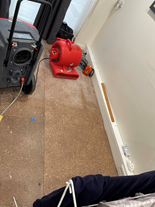
And left 90 litres of water all over the floor, the carpets and the office floorboards. That was not something that could just be ‘sponged away’.
Some of the fish survived, barely breathing in the shallows under the ‘pipe’, but I also lost more than a few of them.


Thankfully, insurance helped deal with the carpet and floor damage (carpets removed, air dryers in the office for three days, running 24/7 to dry the floor.) And a small replacement tank used to keep a few fish alive while I ‘recovered’ – both mentally and organisationally. 


Over the next few days, the incident made me stop and think, OK, what is this telling me?

In terms of the aquarium, it was “Check everything is right and tight,” i.e., all the pipes are connected and in place.  Filters cleaned and functioning correctly. All systems checked and working properly. Are there other leaks or concerns that I have missed? 

Do I have the information in front of me, and am I regularly looking at it to take corrective action?Having had the carpets replaced (finally – despite lockdown restrictions) and ‘refurnishing’ the office – When you go back to a bare room, it gives you scope to relook at the whole set-up – It made me think – In the context of business, what is the lesson from this?


As I see it, it is very easy for us to get caught up in ‘doing the do’ and not looking at “what” we do and “how” we are doing it.
We focus on the job at hand, not the follow-up, and then move on to the next job. Have we been paid for past work? Who or what do we owe? What information do I need to supply – (to the taxman, the bank, the accountant, etc.). Do I really know how my business is going?
Did I check back with that client? Or follow up on that enquiry? Have I looked at my processes – are they efficient, or am I missing or taking more steps than I need to? Where am I at, and how easy is it for me to know how I am going?


Am I ‘making do’ until later instead of fixing things now? For some, the Lockdown period has been an opportunity to reexamine things and how they do them. For others, it may have pushed these actions into the background, so now, as we start to open up again, we find that the ‘pipes are loose’, or the wheels are off-kilter.  There are gaps in our processes that need fixing.From a business point of view, this means having an eye on the financial aspects of your business. Having the key data that you need to be aware of, to keep you on track.With The Xero accounting system, there is a lot of information that is relatively easy to access in terms of how your business is going, and what needs to be done. But for some, the Infomation is presented too much like ‘accountants speak’ – too dry, and not clear enough for a quick understanding.
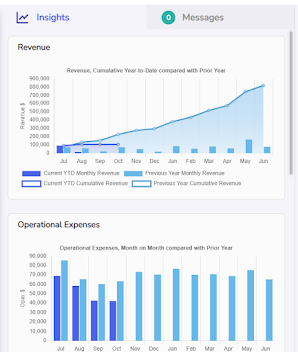
So, what if I could give you a system that looks at your data in Xero, and gives you simple summaries of information – like ‘how much do I need to pay next week? What is due to me from invoices outstanding? What is overdue? What is my profit for the month? How much ‘paperwork do I need to catch up on?

Packaged into easy, quick answers that look like tweets rather than another chapter of War and Peace?

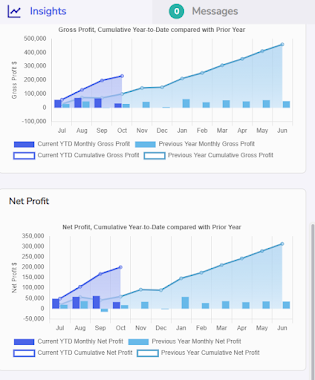
Something that looks like this? And sent to you on your phone or tablet for easy access?


Or a web based dashboard that shows something like this:


As well as a rundown of items to be looked at. And an “Alexa/Siri” style ‘ask me’ facility to look over various items in the reports. Or to find out more information. And a portal to “ask me anything” as well. Would this be useful to you? Would it help to focus on particular areas that we need to discuss – and take action on? It is a web and app-based system called Aider, which I have been looking at as a ‘Dashboard’ system to help me look over client data. Many features have already been added, and more will come as they continue to develop the system. (Which I am involved in the review of currently) This system can also capture information from other sources – like your social media marketing, point of sale systems, banking, and calendar systems- to be a quick ‘one stop’ for your information. It can connect up to 16 apps, has lots of social media analytics, and provide easy-to-digest information for you 24/7. 


The idea, of course, is to focus on the key parameters. If you like, the ‘oxygen pipe’ allows your business to breathe and not leak cash, clients, activity, etc.

  1. What have I invoiced for the last week/month?
  2. What bills do I need to pay in the next week/month? What are my tax liabilities? DO I need to pay any super?
  3. What jobs need completing? What projects need to be started/completed/invoiced?
  4. Am I on track? Are my sales/expenses/cash at the bank at the level I expected for the year?
  5. Is my system helping me or hindering me from keeping my finger on the pulse? What can I do about it to improve?I believe that this system can help us get to these key elements quickly and easily – as well as helping us here to keep an eye on your accounts to see if we can help you with anything in your files.

I will be rolling this out with a number of our clients and look forward to discussing the details further with you as part of our work with you.  Give me a call, and let’s see how this system can help you keep your oxygen pipe stay secure, unblocked and flowing free!


As for my fish – They are housed in a new tank (as further checks and tests found more than one problem that I had to deal with!) and living happily again.


Even Jasper approves of the new facilities.


And the office set-up is better than before – ready to accommodate face-to-face appointments soon!


For more information on Aider, go to www.aider.ai, or call me to discuss.


And a great Youtube site on keeping fish that I can highly recommend is “Lazarus the Fish Boy” 


Easy to follow and a great watch! And yes, he is the son of one of our hugely talented clients!    

Let’s keep the Oxygen flowing and breathe new life into your business!


August 26, 2021

 I’ve got the Lockdown Blues – cause I can’t play to a crowd!


<!–


–>

With the series of lockdowns and curfews occurring in Victoria since May 27, 2021, one of the most affected areas, is the performing arts industry.

Singers, musicians, writers, actors, and also the associated crew and support, including technical, retail and merchandise, and event promotion staff and businesses have been shut down throughout the strate, with little or no support. Even as venues open, density limitations have meant that many places have cancelled performances that had been booked months in advance.

Many of the people affected have not qualified for the various business support grants, usually because they are not GST registered, are subject to more casual or intermittent work, and may not be as ‘structured’ as many other business operations. (We can do something about that – but that is the subject of a separate discussion that we are happy to have one on one with you)

The Victorian Government has provided a level of support – for both the individual performers and crew, as well as venues who have had gigs and performances shut down by the metropolitan or regional lockdowns.

There are two Support funds currently available to assist those affected:


1. Live Performance Support Program (Suppliers) Round Two

This provides support to ‘contracted suppliers’.

Who is a contracted supplier?
This is defined in the program as:
A contracted supplier to a live performance event is a business whose primary activity is the delivery of a featured or advertised performance or other goods and services to support the delivery of a live performance event. This may include performers, crew, venues, merchandise sellers, technicians and engineers, as well as the ‘on stage’ performers.

And it is not limited to music performances. It is a “Live Performance Event”, which presents creative/cultural content and may include but is not limited to music, singing, theatre, opera, dance, comedy or arena event. It does not include sporting, business, private or educational events in this grant scheme.  (Some of those businesses are covered in other Support funds currently being offered)

A Payment of $200 or $500 per event is possible (based on what the fee for the cancelled performance would have been)  with payment for up to 20 gigs (to a maximum of $4,000) possible within the funding round.

The performance will need to have been planned as follows:

  1. To be delivered or performed between May 28 and September 2, 2021;
  2. Live, in-person audience (i.e. not ‘just’ a streamed performance)
  3. Held indoors or outdoors
  4. With an expected audience of at least 75 people or a series of performances over multiple days at the same location with an expected minimum audience of 200 or more. (I am seeking clarification on how this is impacted by density limitations that were in place prior to, and during, the lockdown periods)

This funding also applies for interstate gigs – i.e. Victorians who were meant to ‘cross the border’ and perform or work interstate in the same way, would be eligible for this support grant.

Where costs incurred / claims are between $200 – $500 per gig, then a grant of $200 is applied. For costs of over $500, then a $500 grant is paid.

2. Live Performance Support Program (Presenters) Round Two

In a similar way, there is a support fund for the ‘venues’ that have been impacted by the lockdowns and suffered losses as a result.
The terms and conditions of this grant are similar to the ‘suppliers’ grant, regarding dates, type of performance and estimated attendances. For the Presenters, a funding claim is possible for up to $7,000 for one event, with a further claim for a second event for up to $5,000 also possible.
This grant is also available to performers who were intending to promote their own show as well – i.e. it is not limited ‘just’ to established venues (pubs, clubs, etc)

For this grant, it may be necessary to identify ‘key suppliers’, from whom the presenter intended to receive goods or services, with up to 10 suppliers identified. This of course, could be food and beverage suppliers, performers, venue hire and crew.

Closing date for applications – and estimated payment timelines

The final date (currently) for lodgement of the application is September 8, with payment ‘anticipated’ to occur within 15 days of the closing of applications – so it would be expected to be paid by September 23.

A number of items must be included within the application, and a few background checks on items like ANZSIC codes, ABN, and related registrations must be confirmed before an application is lodged. This reduces the possibility of delay or rejection of the claims.

We can assist you with the process, prepare and lodge the claims on your behalf, and monitor the claim process with Business Victoria after it has been lodged.

If you – or anyone you know – may be eligible for these support funds, please call me on 0409 788 399, or email me at stuart.smith@fiscalartisans.com.au to discuss your situation and work on your application.
 
I look forward to hearing from you!
 
Rock on!
 
Stuart

For more information on Fiscal Artisans, please go to our website

<!–


–>or

Book an appointment

<!–


–>


July 28, 2021

If your Business Feels like you are scaling Everest,

It’s Time to Go Beyond The Numbers.

You have done more in the last financial year than just survive, but it has been hard!

This is the time that we turn our attention to our year-end obligations – namely, preparing financial statements and preparing tax returns, and looking at how well (or otherwise) we have done for the year.

For many, the financial statements and tax returns that we prepare are a ‘historical document’. It is a look at the numbers ‘in the past’. But what it can be, is a roadmap to the future – the starting point to your next trek.

What do you have your sights set on for 2021/2022? How can we Go Beyond The Numbers to help you achieve it?

With another financial year over, and one which for so many will have been one of the hardest ever faced, it is beneficial to look at your current situation and reflecting on your successes, not just what has or has not happened.

For many, being in business is a bit like trying to climb Mount Everest.

It is tough!

The air is thin up there, and it seems like something many dream about, but few succeed at actually doing. And no matter how hard you try, you feel like it is all uphill, all the time. And if you fall, the crash will be hard, and deadly.

Let’s look at The Numbers

Many people know that Mt Everest is over 29,000 feet, or over 8,800 meters tall. To scale the mountain, people usually start at one of the two base camps, which are over 5,000 meters above sea level.

To many, it seems an insurmountable task.

But let’s look at this differently, and Go Beyond The Numbers

One of the things that I have been doing for a while is checking in regularly with my business coach. Michael has been a client, friend, confidant, and business coach for some time now. He has helped me look at many aspects of the business, my processes, and, more importantly, the values and ethics inherent within my organisation.

In one of our recent meetings, we looked at the last year or so and set the targets for the year ahead (his and mine). As part of this discussion, we acknowledged that we had done more than just ‘survive’ with what we have been doing over the last few years.

He described it as ‘being at Mt Everest base camp’, having got there under our own power.

Let’s unpack that and how this relates to what you do.

To get to base camp, there are a few options.


 You can fly in; 


You can drive in most of the way;


Or you can walk up to the base camp from sea level.


For many people, ‘just getting to base camp’ is a success. It means that they have gone from ‘zero’ – sea level, starting with nothing but their personal skills and knowledge – to scale a height few people achieve. They can stay there and ‘live’ quite successfully.

In business terms, it means you are running your own business, paying your way, covering your living expenses, and providing for yourself and your family, without having to ‘go back downhill’ and ‘work for wages’ (or get financial support from family or friends to survive). You have ‘got the combination right’, and you are not staying awake at night, wondering how the gas bill will be paid next week.

Having ‘walked up to base camp’, you have developed the strength, the skills, and the resilience to maintain your position at a high altitude. This is something that you need to both acknowledge and celebrate.

In some cases, people have ‘flown’ into base camp without acclimatising to the rarefied air. For most of these people, being at base camp is simply a ‘holiday’, and they cannot stay for very long.


It is much like their business ventures. The ‘fly-ins’ may have had a business purchased for them, or ‘inherited’ the ownership or a partnership arrangement. They get in, make some cash, and get out again. They have not developed their business skills through ability and have probably achieved their success as a result of other peoples ability to ‘get them there’.


That is not what you have done – you have ‘walked to base camp’ yourself. You may have had a group of people with you on the trek, but you got there using your efforts and ability. You walked your talk.

And you are not just surviving. You are thriving.

Think of it this way. The Everest base camp is over 5,000 meters above sea level. Everest is under 9,000 meters. So, if you have ‘achieved base camp’, you are more than halfway there already. Going further is not ‘starting from the bottom’ at all.


But what about scaling Everest? Isn’t that the goal? And how do I get there?

For some, yes, that is the goal, but it is not the ‘only’ goal.

When you get to base camp, it is not hard to look around and see that there are a wide range of mountains that can be climbed. You don’t have to choose ‘Everest’ and be done with it.

Your choice can be completely different to anyone else, or you can simply stay at base camp.


In a business context, that choice could be:

  •   Staying as is, managing and maintaining the business as it stands now, and managing it profitably without aiming for growth and expansion; “Keeping it ticking over and under control”; Perhaps achieving ‘the same result’ from less time, and less effort, and using the spare time for other chosen pursuits;
  •    Doing ‘more of the same’ duplicating the business or expanding the volume of work done (without expanding services, products etc.) “Same but bigger”;
  • Doing something new within the business; “Do we climb Everest, or K2?”
  • Using the profits from the business to build an investment portfolio, pay down debts, etc.; “Let’s go climb Mont Blanc in Europe instead”;
  • Learn new skills (personal or professional) that are unrelated to the business activity; “I’m done climbing. Let’s learn to fly instead.”
  • Or you can work with others and help them build their careers. “Having done it myself, I will show you how to climb”.

The choice is yours. But it is not a choice that means you need to ‘start again’, nor is it something that you need to do ‘alone’.

At base camp, to climb the heights, the first thing you need to do is:

Hire the Sherpas!


The Sherpas are the experienced, local climbers who ‘know the mountain’. They carry the loads needed to support you on your mission, and the local knowledge and guide and support you to achieve your goal of summiting the peak.

In a business context, the Sherpas come in several forms. It is the team of advisers – accountants, lawyers, bank and finance support, coaches and mentors who work with you.

It is also the ‘tools of the trade’ (in the business and finance context) that we use to help you keep on track – and helping to ensure you don’t fall down a crevasse. Tools such as Xero, and add ons like Dext (for data collection) and cashflow tools to keep you on top of your financial information are part of this. Your systems and processes, the way you do the things you do. Your marketing, social media, etc.

And the setup and structure that you ‘wrap’ around your business – with all the statutory and regulatory requirements in place to keep your trek in line.


This is what we mean by ‘Go Beyond The Numbers’. We look at the results, ask questions, and work with you to achieve your next peak. We ‘assemble the sherpas’ and come on the trek with you. We help you mount the summit, and take pride as you stake your claim on the peak.

 As an example, amongst the projects we are assisting clients with are the following:

   a)  Redevelopment of a regional property into a multi-unit dwelling, to retain one and use the others to build an investment portfolio;

   b)  Analysis of a business for sale (and undertake stocktakes and financial lending arrangements) to enable a client to expand their existing business beyond its current regional spread;

   c)  Convert a client business from ‘sole trader’ to a corporate structure, to both reduce total tax payable and expand their opportunities to grow their business;

   d)  Rent or buy? A client wants to look at whether to buy a small property to run their business out of, compared to renting a facility; And assist with the bank’s information needs for this.

   e)  Using property investment to reduce the tax a client pays this year and build an investment portfolio for retirement for their future. (or to ensure that their kids have somewhere they can move into in the future!)

   f)   Manage my portfolio! Would you please help me keep track of my share purchases, sales, dividends etc.? Even Crypto if you can (and, yes, we can)


In all of the above cases, we are working with our clients, helping them to ‘lead the trek’. We “assemble the Sherpas”, be it professional advisers (finance brokers, share traders, lawyers, etc.) and tools of the trade – software, data, reports etc., to help to make things happen. The only limitations (besides legal issues!) are your imagination and desire to make things happen.

So, having got to base camp and realising you are breathing the clean, thin air of achievement, where do you want to go next? 

What is your Everest?

Name your peak, and let’s go! We can make 2021/22 the time of your next achievement, plan, take action, and make it happen.

What is it going to be? Call or email me, and let’s talk about it.


Onwards and upwards – and let’s Go Beyond The Numbers.

Stuart Smith

Director (and Head Guide)

Fiscal Artisans