tax – Fiscal Artisans - Page 2

September 28, 2022
Article-Images-10.png?fit=500%2C500&ssl=1


Book your home loan health check today

With interest rates on the rise, there has never been a better time to review your home loan.

Our team of brokers can look at the options available on the market, and compare the options to your current situation.

We can look at your rate, term, repayments, and equity, giving your loan a full check-up to make sure it’s still right for you and your current needs.

Then, if they can add value to what you already have, they will talk you through:

  • What rates are available for your loan options
  • 100% offset options on fixed or variable loans
  • How LVR (your loan to value ratio) works
  • what other options are available to you

This can also be the start of your plans to look at your financial plans, whether that be an investment property, holiday home, renovations, debt consolidation or minimisation, or helping your children get into their first place.

Click here (Home Loan Fact Finder) to download the fact finder, then send it to us at info@fiscalartisans.com.au.

We will review the information and pass it to our finance associates to analyse. They will then get in touch with your to arrange a time to talk with you and discuss your alternatives and look at the best options on the market for your home loan options.

Find out how you can pay down your home loan faster, use your equity to reduce your tax liabilities and increase your wealth portfolio and set up your future plans.

Take advantage of this opportunity, and give your home loan a spring clean!


September 9, 2022
rishabh-varshney-bt41lw9i6Kc-unsplash.jpg?fit=1200%2C801&ssl=1

Online, real-time tax time? Big Brother WILL be watching you!

In the attached article is a rundown of the speech given by the ATO commissioner Chris Jordan at the Xerocon 2022 conference in Sydney this week.

The ATO is looking to have a fully digitised, online and REAL TIME payment of tax happening.

And they want this to happen by 2030.

What does this mean to you in business?

It could mean that the ATO will be looking to receive tax payments like GST and PAYG when the transactions occur – online, in real-time.

“If digital systems can bring together point-of-sale, banking and e-invoicing data at the time of purchase or sale, can their systems report the GST paid or collected to the ATO in real-time too?”

I have seen Stripe payments reported for sole traders on the ATO prefill reports as a separate source of income, so the reality is that they are well on the way towards having all the data on hand in real-time. With STP and online payroll systems, it is currently a ‘one-button press’ for regular payroll reporting.

The next phase will clearly be for automatic payroll reporting when the pay run has been finalised. Then perhaps the following stage will be an automatic drawdown of the PAYG and superannuation payments that are due, as each pay occurs.

Or as an ‘automatic drawdown’ on a set date each month, without any paperwork being prepared and lodged with payments following up later.

 What do you need to do as a business owner to prepare for this?

 Talk to your accountant – or get one if you don’t have one already.

And get your systems in place to ensure you know how your business is going, how strong your cash flow is over the months ahead, and make sure your plans and projections are in place.

Ensure that your payment and receivable systems are working properly and that your invoices are being paid regularly. Are you managing this yourself? Do you need support, and perhaps professional management of this?

Work with your accountant and bank to get the right support – overdrafts, credit limits etc. to manage your cash flow requirements.

For accountants, the focus will be far less on ‘churn and turn’ preparation of annual tax returns, where they provide a low cost, quick process, and high volume (and probably no advice) service. Instead, accountants will need to be focused on helping businesses manage their operations, grow their businesses, and adhere to their financial obligations.

Your accountant should be your business partner, that can help you:

 Go Beyond The Numbers.

To discuss this, and to look at how we can help you grow your business contact us at 0409788399 or at info@fiscalartisans.com.au

https://www.accountantsdaily.com.au/tax-compliance/17528-ato-boss-outlines-future-where-tax-just-happens?utm_source=Accountants%20Daily&utm_campaign=09_09_22&utm_medium=email&utm_content=1&utm_emailID=0152c813751e62c04826246784c2c4b59a95398a1940f069dae8bb75abc624b3


← Back

Thank you for your response. ✨


March 30, 2022
fiscal-artisans-favicon.webp?fit=141%2C130&ssl=1

Australian Federal Budget 2022
The AfterPay Budget
 Vote Now Pay Later!

BNPL icons

Last night, Treasurer Josh Frydenburg delivered the Australian Federal Budget for the next 12 months. But in reality, with the election about to be announced – with an expected poll date of May 14, 2022, (the PM mentioned this date on 2GB this morning)  the budget’s main aim is solely to get the Government to that date, and, they hope, elected, despite all polling indications, for a further term of Parliament.  The key elements announced and widely reported relate to what the Government calls ‘cost of living’ support. With costs rising over the last few years and significantly in the last few months due to rising fuel prices, supply issues and a lack of wage rises for most Australians, a ‘correction’ in the economy, with an easing of the financial pressure that many have been feeling over the last few years is desperately needed. So what has been offered and forecast?      

$250 one-off payment to those on the following payments:

  • Age Pension.
  • Disability Support Pension.
  • Parenting Payment.
  • Carer Payment.
  • Carer Allowance (if not in receipt of a primary income support payment).
  • Jobseeker Payment.
  • Youth Allowance.
  • Austudy and Abstudy Living Allowance.
  • Double Orphan Pension.
  • Special Benefit.
  • Farm Household Allowance.
  • Pensioner Concession Card holders.
  • Commonwealth Seniors Health Card holders.
  • Eligible Veterans’ Affairs payment recipients and Veteran Gold cardholders.  

The payments are exempt from tax and will not count as income support for the purposes of any income support payment. A person can only receive one economic support payment, even if they are eligible under two or more categories outlined above.  The payment will only be available to Australian residents. This is a one-off payment and NOT an ongoing increase to any of these benefits. The ongoing discussion of the appropriate level of support for pensioners and Jobseekers has not been addressed In the budget. The payment will occur in April 2022 – i.e. after the election has been called but before the polling date.

Temporary reduction in Fuel Excise

The Government will help reduce the burden of higher fuel prices by halving the excise and excise-equivalent customs duty rate that applies to petrol and diesel, and all other fuel and petroleum-based products except aviation fuels, for six months. This measure will commence from 12.01 am on March 30 2022, and will remain in place for six months.

However, this may take 2-3 weeks to be seen ‘at the bowser’ as existing stocks are sold and then replaced. Ongoing fluctuations of the crude oil price, production costs and exchange rates may add to or diminish any benefit actually seen at the bowser.

Note that the calculation of indexation will continue to happen over the 6 month period that this ‘relief’ will occur, so when the excise is returned to its ‘normal’ levels in October, we may see a price increase that is well above the 22 cents per litre reduction that we are currently hoping for.


Increase in low and middle-income tax offset

For a number of years, there has been a ‘non’ cash refundable’ tax offset that has been continually extended for ‘one more year’. We have this situation again, but this time with a last ‘bonus’ of $420.

This is the “$420” relief payment that has been described as a ‘cost of living’ tax offset in the budget.

 It will apply to everyone who has a taxable income of LESS then $126,000, and its timing is dependent on the lodgement of your 2022 tax returns. i.e. it will NOT be paid before July 1, 2022, and may not be received by many until well into the second half of the year.

Note also that if your total tax payable is less than the total value of the rebate, you may not receive all or any of the benefits.

 What has not been mentioned is that this is – at this stage – the FINAL year of this offset, which has been extended year after year for some years now. With the stage 3 tax cuts due to be introduced in 2024-25, people on ‘middle incomes’ ($45,000 to $126,000) will face an effective tax increase in the 22/23 year (i.e. from July 1), So while anyone with an income under $126,000 will receive a benefit of an extra $420 after July this year, they face an additional tax take of $1,080 after July next year. The ‘Afterpay’ effect!

Changes effective for business – and ‘creating growth opportunities’ 

Skills and training boost.

The Government will introduce a skills and training boost to support small and medium-sized businesses to train and upskill their employees. The boost will apply to eligible Expenditures incurred from 7:30 pm (AEDT) on March 29 2022 (i.e., Budget night) until June 30 2024, by Small and medium-sized businesses (with an aggregated annual turnover of less than $50 million) will be able to deduct an additional 20% of Expenditure incurred on external training courses provided to their employees. The external training courses will need to be provided to employees in Australia or online and delivered by entities registered in Australia.

Some exclusions will apply, such as for in-house or on-the-job training and Expenditure on external training courses for persons other than employees. (Without any legislation, this is open to debate, but it may mean that directors of companies/self-employed business owners CANNOT claim their OWN external training. But until we get details, we cannot be certain. That is not likely to occur until after the election as the changes required for this are not likely to pass through Parliament before the election.)

But while this applies to eligible Expenditure incurred from today, the actual benefit (tax deduction) will not occur until June 30, 2023. i.e. Expenditure from today to June 30, 2022, can ONLY be claimed in the NEXT tax year.

So, using Frydenburgs example from budget night. If you spend $100 on training your staff ‘today’, you can claim a $120 tax deduction (which, with a corporate tax rate of 25%, gives a tax benefit of $30 in 2023 instead of $25 in 2022) and reduce your tax sometime after July 1, 2023. 

 Technology Investment Boost

The Government will introduce a technology investment boost to support digital adoption by small and medium-sized businesses. The boost will apply to eligible Expenditures incurred from 7:30 pm (AEDT) on March 29 2022 (i.e., Budget night) until June 30 2023.

Small and medium-sized businesses (with an aggregated annual turnover of less than $50 million) will be able to deduct an additional 20% of Expenditure incurred on business expenses and depreciating assets that support their digital adoption (such as portable payment devices, cyber security systems or subscriptions to cloud-based services).

An annual cap will apply in each qualifying income year so that Expenditures up to $100,000 will be eligible for the boost. This equates to a maximum additional deduction of $20,000 per eligible year.

For eligible Expenditure incurred by June 30 2022, the boost will be claimed in tax returns for the following income year. For eligible Expenditure incurred between July 1 2022, and June 30 2023, the boost will be claimed in the income year in which the Expenditure is incurred.

Whether this applies to current subscriptions (such as Xero, office 365 etc.) that are being used or only ‘new’ acquisitions is unclear. And, in the same way, as the ‘skills’ boost, anything incurred that can be claimed in the current year will not be claimed – or provide a tax benefit – until the end of the 22/23 tax year – so the ‘financial benefit’ will not be seen until after July 2023.

Varying the quarterly tax instalments

For those who have ongoing PAYG instalment payments (company tax instalments, investment income or sole traders), the annual calculation of the instalment has often been based on ‘last year’s income plus 10%’ to work out the expected income on which the tax is calculated.

 For the next 12 months, the Government has reduced this ‘uplift’ to 2%, so the amount required to ‘cover’ the quarterly instalment will be lower.

While this will assist cash flow in the short term, the kicker is that if your business HAS increased its profit substantially in the year, it will have a LARGER year-end tax bill, as you will have paid less tax ‘as you go’.

The next change – proposed for January 2024 – is to base PAYG instalments on the ACTUAL quarterly performance “Where Business accounting software permits this”. i.e. we may be approaching the need to lodge ‘adjusted profit reports each quarter’ to calculate the tax instalment that needs to be paid. This may have some benefits where income and expenses are very ‘seasonal’ or where there is a large fluctuation in profit each quarter, meaning less tax is paid when times are harder and more paid when funds are flowing – but it will also require all businesses to be ‘on the ball’ with their accounts every month to keep track of their tax liabilities as they go. There will be more on this AFTER the election! 

Apprentices and trainees

The Government has extended its support in boosting the apprenticeships scheme, providing A$5000 payments to new apprentices over two years and extending subsidies of up to A$15,000 for employers who take them on.

Frydenberg said the Government would also support an additional 800,000 training places with a A$3.7 billion investment. 

Will there be sufficient funding for the TAFE places required for these apprentices? And will they be limited to specific industries? We await more details.

Infrastructure 

The budget also makes commitments to several strategic infrastructure projects around the country.  

There are budget commitments for faster rail projects from Brisbane to the Sunshine Coast, from Sydney to Newcastle, Perth’s METRONET project, the North-South Corridor in South Australia, Great Eastern Drive in Tasmania, and Central Australian Tourism Roads in the Northern Territory.

There is also an investment in the Melbourne Intermodal Terminals to increase the efficiency of the national freight network, and more than A$500 million for local councils to deliver priority projects and A$880 million to better connect regional Australia with ports, airports and other transport hubs.

The worry here is the usual – announcements, not action. And As Leigh Sales on 7:30 last night stated – if you overlay the location of most of the announced plans with the electoral map, they are focused on marginal seats, or seats that the Government need to retain or win. Infrastructure Australia has approved only 12% of the projects, so the announcements don’t tie in with economic or social priority or need in many cases.

 Ok, so what are the costs and the losses?

Renewable energy

Federal government spending on climate change measures will decline every year for the next four years. This includes the spending on carbon credit purchases, the Clean Energy Finance Corporation, Australian Renewable Energy Agency and the Clean Energy Regulator. Spending will drop from $2 billion in 21/22 to $1.3 billion on 25/26. We are 7 years from the 2030 ‘threshold’, and the Government is reducing its activity in this area. Any change will need to come purely from the ‘market’ or state government action.

You would think that the Lismore floods, the bleaching great Barrier Reef, and the constant downpours in Sydney would have affected policy action.

The Rise and Fall of The Arts

It seems that far too many see this area as being ‘just a nice thing to have’, forgetting the size of the industries involved – Film, TV, Music, Theatre, galleries, pubs, clubs, dance etc. But it falls away for some when it comes to the economic factors. A $111.7 billion sector in 2018 – 6.4% of GDP. But not considered worthy of a separate ministerial portfolio in the current Parliament.

Total Federal spending is forecast to reduce by 20% in 22/23, with a $140 million reduction in the RISE funding – from $160 million to $20 million, and then no further after the 22/23 year. This funding supported the ‘rebuild’ of various festivals, tours, exhibitions etc., but needs to continue to help rebuild a sector that was decimated over the last 2 years. There is no growth (beyond marginal CPI increases) in any other part of the Arts funding either. In fact, the total funding is expected to fall from $799 million in 22/23 to $744 million in 25/26. Australian Music Administration spending drops from 6.3 million in 22/23 to nothing in 24/25. Regional Arts funding falls from $18 million to $7 million in 22/23.

At a time when Film Production and post-production, animation, gaming, and music production has the ability to grow and be globally significant, with an “Australian flavour”, the support to grow the sector in all parts of the country is being removed.

Do you wanna build a submarine, I mean a snowman? 

Ring the bell – its closing time…

With the ‘end of the pandemic’ and lockdown provisions, a number of the policies put in place over the last few years are now ending.

Temporary Full expensing will finish June 2022 – so if you want to claim a full 100% tax deduction ‘up front’ for your equipment or business vehicle purchase, it now MUST be ordered by this June 30 and installed for use by June 30, 2023. Any expectations that this would continue have now finished, and from July 1, 2022, the previous depreciation rates will apply again.

This may also have implications for other ‘instant asset write-offs’, which will need to be examined as regulations and legislation are put in place.

The forecasts!

The budget forecasts that a ‘strong labour market’ will mean an unemployment rate of less than 4%. They say that this will drive wages growth with a forecast increase of 3.25% in wages over the coming year.

But, Unemployment is being defined as Less than 1 hour of work per week. If we used the same definition as the last time Australia had a sub 4% unemployment rate, we would be looking at something closer to 16.3% taking into account the underemployed levels, so the expectation of wage growth, being based on ‘supply and demand issues alone’ has to be tempered by this factor. Wages won’t necessarily rise if a large pool of underemployed staff can simply have their hours extended instead of being paid ‘more per hour’.

Inflation is forecast to reduce from 4.25% to 3% 2.75% in 23/24, but this will be very dependent on commodity prices falling (including oil), supply change improvements, and exchange rate stability. Any or all of these factors could see inflation stay over 4% p.a. or climb higher – which may lead to interest rate adjustments happening sooner rather than later.

The deficit for the current year is now forecast to be $80 Billion – down by $20 Billion on last year’s forecast (due to higher commodity prices for what we dig up and ship overseas), and ‘stabilise’ at around $78 Billion for the 22/23 year. With ongoing tax revenue increases – arising out of wage and profit growth leading to more tax being paid – the budget is still expected to be $40 Billion in deficit in 25/26.

The Treasurer claims that we have ‘turned the corner’ because the debt peak will now be ‘not as high’ and ‘a bit sooner’ than previously forecast. This sounds like the “Back in Black” pronouncements in the year before the pandemic – which were already proven wrong before that nasty little virus shut most of us into our homes and 5 km walk zones for the last 2 years! A treasurer’s forecasts are often as accurate as the old Lou Richards Kiss of Death Football Tips, so we take much of this with a large pinch of salt.

Total Government spending is around 26% of GDP – It never peaked above 23% of GDP under the previous Labor government. Tax revenue is around 24% of GDP (also higher than the Labor years). So, currently, the Government has what is called a ‘structural deficit’ (in basic terms – it is spending much more than it is earning). While I won’t fall into the simplistic’ home budget’ comparisons, and there are many who will argue that it does not matter if a government runs deficits all the time (as who is going to bankrupt them?), it is much like developing a business – at some point in time, you DO expect that the revenue is going to be greater than the spending, and you recover some or all of the money that you have spent or invested in getting the business going. Repeated waste and inefficiency or politically motivated decisions make this harder to overcome, and governments need to improve their performance in this aspect regardless of their political colours. Much of the deficit could be recovered in this way. E.g. Defence spending, while overall being necessary, has seen so many examples of botched equipment purchases that have cost billions and produced nothing. This money could have been re-purposed for far better uses and saved considerable money and pain. 

In the words of Ross Gittens in the Age / Sydney Morning Herald:

This budget is not as fiscally responsible as the Government would like you to believe when it’s claiming to be the party of good economic management, but nor is it as fiscally irresponsible as it would like you to believe when it is claiming to have fixed your problem with the cost of living.

We await the Opposition’s reply, and let the election campaign begin!


November 12, 2021
immo-wegmann-5PqBCWUtYbo-unsplash.jpg?fit=1200%2C795&ssl=1

The Federal government has now set up an identification system for all company directors in Australia. 

Like your Tax File Number or an ABN, it is a unique identifier used with all entities in which a person holds a director’s position. i.e. the number is ‘attached’ to the person, not the company.

 The intention is that this system helps to deal with false directorships or fraudulent director identities. It will also deal with the common situation of multiple names being used for an individual (such as middle names being included or excluded with different directorships. 

The number itself is a 15 digit code that adheres to international standard ISO 3166. All Australian Directors will have a number that starts with ‘036’, followed by an 11 digit unique number and a ‘check digit’ that is used to determine the validity of the number being used (This is similar to the TFN and ABN numbers in terms of validity checking)

As of November 1, 2021, everyone who was a director has until November 30, 2022, to apply for a Director ID. Anyone who becomes a company director for the first time between November 1, 2021, and April 4, 2022 must obtain a director ID within 28 days of their appointment. You MUST have a Director ID after April 4, 2022, before you are appointed to your first company director position.

Ok, so what do you need to do to get a Directors ID? It’s simple. 

  1. Register your details with MyGovID. You may have done this already to get your vaccination certificate, medicare details or tax information If not, you will need to supply various ID documents to verify yourself (such as drivers licence, passport, medicare details etc
  2. Apply for the Director ID via MyGovID.

To make the process easier, I will be sending all current directors on our corporate register system an email with the details of all the companies they are associated with and the direct links to apply for a Director ID. (Note that this includes companies that are solely trustees of trusts or superannuation funds.) It will generally only take a few minutes for you to complete the process.

When you have your Directors ID, could you please forward the details to me so that I can record them in our system? This way, it will ensure that the details appear on your company’s documents as required in the future.

If you have any questions or need more information on setting up your Directors ID, please feel free to contact us!


October 21, 2021
zq-lee-Q6H4SwjsAdI-unsplash.jpg?fit=1200%2C800&ssl=1

Those of you who have been to my office, or perhaps seen the background on our Zoom chats, will know that I have a fish tank just behind my desk.

Freshwater Tropical Fish. They are relaxing to watch and provide a nice vista in the room.

Watching the freshwater mussel wander around the tank is fascinating!  (Who knew they moved around so much?)
Anyone who has kept an aquarium knows that regular maintenance is needed. Clean the tank, the filters, test and change a portion of the water. Feed the fish (of course!), re-vegetate or decorate the tank. And at times, deal with illnesses, or restock the tank.
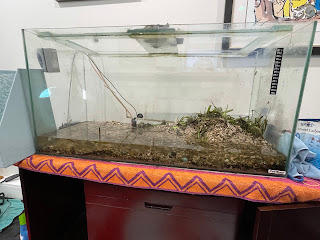
A few weeks ago, after doing a water change in an evening, I came into the office the following morning to find a disaster had occurred. 
The oxygen pipe – which ‘bubbles’ Oxygen through the water in the tank – had come loose from its pump. 
 
The oxygen pipe became a water leak.


Instead of providing life, it was leaching it out of the tank.

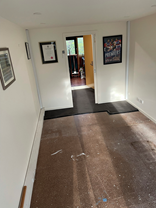
And left 90 litres of water all over the floor, the carpets and the office floorboards. That was not something that could just be ‘sponged away’.
Some of the fish survived, barely breathing in the shallows under the ‘pipe’, but I also lost more than a few of them.


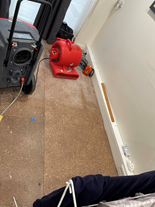
Thankfully, insurance helped deal with the carpet and floor damage (carpets removed, air dryers in the office for three days, running 24/7 to dry the floor.) And a small replacement tank used to keep a few fish alive while I ‘recovered’ – both mentally and organisationally. 


Over the next few days, the incident made me stop and think, OK, what is this telling me?

In terms of the aquarium, it was “Check everything is right and tight,” i.e., all the pipes are connected and in place.  Filters cleaned and functioning correctly. All systems checked and working properly. Are there other leaks or concerns that I have missed? 

Do I have the information in front of me, and am I regularly looking at it to take corrective action?Having had the carpets replaced (finally – despite lockdown restrictions) and ‘refurnishing’ the office – When you go back to a bare room, it gives you scope to relook at the whole set-up – It made me think – In the context of business, what is the lesson from this?


As I see it, it is very easy for us to get caught up in ‘doing the do’ and not looking at “what” we do and “how” we are doing it.
We focus on the job at hand, not the follow-up, and then move on to the next job. Have we been paid for past work? Who or what do we owe? What information do I need to supply – (to the taxman, the bank, the accountant, etc.). Do I really know how my business is going?
Did I check back with that client? Or follow up on that enquiry? Have I looked at my processes – are they efficient, or am I missing or taking more steps than I need to? Where am I at, and how easy is it for me to know how I am going?


Am I ‘making do’ until later instead of fixing things now? For some, the Lockdown period has been an opportunity to reexamine things and how they do them. For others, it may have pushed these actions into the background, so now, as we start to open up again, we find that the ‘pipes are loose’, or the wheels are off-kilter.  There are gaps in our processes that need fixing.From a business point of view, this means having an eye on the financial aspects of your business. Having the key data that you need to be aware of, to keep you on track.With The Xero accounting system, there is a lot of information that is relatively easy to access in terms of how your business is going, and what needs to be done. But for some, the Infomation is presented too much like ‘accountants speak’ – too dry, and not clear enough for a quick understanding.
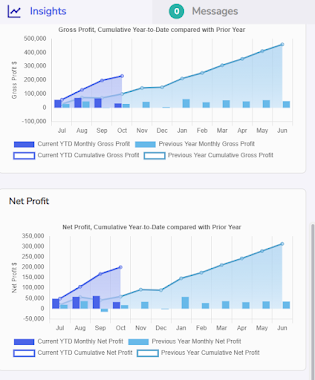
So, what if I could give you a system that looks at your data in Xero, and gives you simple summaries of information – like ‘how much do I need to pay next week? What is due to me from invoices outstanding? What is overdue? What is my profit for the month? How much ‘paperwork do I need to catch up on?

Packaged into easy, quick answers that look like tweets rather than another chapter of War and Peace?

Something that looks like this? And sent to you on your phone or tablet for easy access?


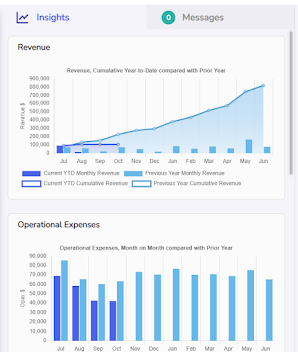
Or a web based dashboard that shows something like this:


As well as a rundown of items to be looked at. And an “Alexa/Siri” style ‘ask me’ facility to look over various items in the reports. Or to find out more information. And a portal to “ask me anything” as well. Would this be useful to you? Would it help to focus on particular areas that we need to discuss – and take action on? It is a web and app-based system called Aider, which I have been looking at as a ‘Dashboard’ system to help me look over client data. Many features have already been added, and more will come as they continue to develop the system. (Which I am involved in the review of currently) This system can also capture information from other sources – like your social media marketing, point of sale systems, banking, and calendar systems- to be a quick ‘one stop’ for your information. It can connect up to 16 apps, has lots of social media analytics, and provide easy-to-digest information for you 24/7. 


The idea, of course, is to focus on the key parameters. If you like, the ‘oxygen pipe’ allows your business to breathe and not leak cash, clients, activity, etc.

  1. What have I invoiced for the last week/month?
  2. What bills do I need to pay in the next week/month? What are my tax liabilities? DO I need to pay any super?
  3. What jobs need completing? What projects need to be started/completed/invoiced?
  4. Am I on track? Are my sales/expenses/cash at the bank at the level I expected for the year?
  5. Is my system helping me or hindering me from keeping my finger on the pulse? What can I do about it to improve?I believe that this system can help us get to these key elements quickly and easily – as well as helping us here to keep an eye on your accounts to see if we can help you with anything in your files.

I will be rolling this out with a number of our clients and look forward to discussing the details further with you as part of our work with you.  Give me a call, and let’s see how this system can help you keep your oxygen pipe stay secure, unblocked and flowing free!


As for my fish – They are housed in a new tank (as further checks and tests found more than one problem that I had to deal with!) and living happily again.


Even Jasper approves of the new facilities.


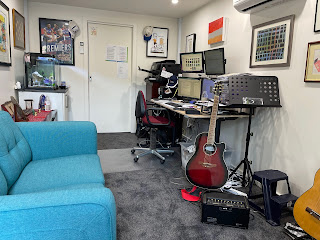
And the office set-up is better than before – ready to accommodate face-to-face appointments soon!


For more information on Aider, go to www.aider.ai, or call me to discuss.


And a great Youtube site on keeping fish that I can highly recommend is “Lazarus the Fish Boy” 


Easy to follow and a great watch! And yes, he is the son of one of our hugely talented clients!    

Let’s keep the Oxygen flowing and breathe new life into your business!


August 26, 2021

 I’ve got the Lockdown Blues – cause I can’t play to a crowd!


<!–


–>

With the series of lockdowns and curfews occurring in Victoria since May 27, 2021, one of the most affected areas, is the performing arts industry.

Singers, musicians, writers, actors, and also the associated crew and support, including technical, retail and merchandise, and event promotion staff and businesses have been shut down throughout the strate, with little or no support. Even as venues open, density limitations have meant that many places have cancelled performances that had been booked months in advance.

Many of the people affected have not qualified for the various business support grants, usually because they are not GST registered, are subject to more casual or intermittent work, and may not be as ‘structured’ as many other business operations. (We can do something about that – but that is the subject of a separate discussion that we are happy to have one on one with you)

The Victorian Government has provided a level of support – for both the individual performers and crew, as well as venues who have had gigs and performances shut down by the metropolitan or regional lockdowns.

There are two Support funds currently available to assist those affected:


1. Live Performance Support Program (Suppliers) Round Two

This provides support to ‘contracted suppliers’.

Who is a contracted supplier?
This is defined in the program as:
A contracted supplier to a live performance event is a business whose primary activity is the delivery of a featured or advertised performance or other goods and services to support the delivery of a live performance event. This may include performers, crew, venues, merchandise sellers, technicians and engineers, as well as the ‘on stage’ performers.

And it is not limited to music performances. It is a “Live Performance Event”, which presents creative/cultural content and may include but is not limited to music, singing, theatre, opera, dance, comedy or arena event. It does not include sporting, business, private or educational events in this grant scheme.  (Some of those businesses are covered in other Support funds currently being offered)

A Payment of $200 or $500 per event is possible (based on what the fee for the cancelled performance would have been)  with payment for up to 20 gigs (to a maximum of $4,000) possible within the funding round.

The performance will need to have been planned as follows:

  1. To be delivered or performed between May 28 and September 2, 2021;
  2. Live, in-person audience (i.e. not ‘just’ a streamed performance)
  3. Held indoors or outdoors
  4. With an expected audience of at least 75 people or a series of performances over multiple days at the same location with an expected minimum audience of 200 or more. (I am seeking clarification on how this is impacted by density limitations that were in place prior to, and during, the lockdown periods)

This funding also applies for interstate gigs – i.e. Victorians who were meant to ‘cross the border’ and perform or work interstate in the same way, would be eligible for this support grant.

Where costs incurred / claims are between $200 – $500 per gig, then a grant of $200 is applied. For costs of over $500, then a $500 grant is paid.

2. Live Performance Support Program (Presenters) Round Two

In a similar way, there is a support fund for the ‘venues’ that have been impacted by the lockdowns and suffered losses as a result.
The terms and conditions of this grant are similar to the ‘suppliers’ grant, regarding dates, type of performance and estimated attendances. For the Presenters, a funding claim is possible for up to $7,000 for one event, with a further claim for a second event for up to $5,000 also possible.
This grant is also available to performers who were intending to promote their own show as well – i.e. it is not limited ‘just’ to established venues (pubs, clubs, etc)

For this grant, it may be necessary to identify ‘key suppliers’, from whom the presenter intended to receive goods or services, with up to 10 suppliers identified. This of course, could be food and beverage suppliers, performers, venue hire and crew.

Closing date for applications – and estimated payment timelines

The final date (currently) for lodgement of the application is September 8, with payment ‘anticipated’ to occur within 15 days of the closing of applications – so it would be expected to be paid by September 23.

A number of items must be included within the application, and a few background checks on items like ANZSIC codes, ABN, and related registrations must be confirmed before an application is lodged. This reduces the possibility of delay or rejection of the claims.

We can assist you with the process, prepare and lodge the claims on your behalf, and monitor the claim process with Business Victoria after it has been lodged.

If you – or anyone you know – may be eligible for these support funds, please call me on 0409 788 399, or email me at stuart.smith@fiscalartisans.com.au to discuss your situation and work on your application.
 
I look forward to hearing from you!
 
Rock on!
 
Stuart

For more information on Fiscal Artisans, please go to our website

<!–


–>or

Book an appointment

<!–


–>


July 28, 2021

If your Business Feels like you are scaling Everest,

It’s Time to Go Beyond The Numbers.

You have done more in the last financial year than just survive, but it has been hard!

This is the time that we turn our attention to our year-end obligations – namely, preparing financial statements and preparing tax returns, and looking at how well (or otherwise) we have done for the year.

For many, the financial statements and tax returns that we prepare are a ‘historical document’. It is a look at the numbers ‘in the past’. But what it can be, is a roadmap to the future – the starting point to your next trek.

What do you have your sights set on for 2021/2022? How can we Go Beyond The Numbers to help you achieve it?

With another financial year over, and one which for so many will have been one of the hardest ever faced, it is beneficial to look at your current situation and reflecting on your successes, not just what has or has not happened.

For many, being in business is a bit like trying to climb Mount Everest.

It is tough!

The air is thin up there, and it seems like something many dream about, but few succeed at actually doing. And no matter how hard you try, you feel like it is all uphill, all the time. And if you fall, the crash will be hard, and deadly.

Let’s look at The Numbers

Many people know that Mt Everest is over 29,000 feet, or over 8,800 meters tall. To scale the mountain, people usually start at one of the two base camps, which are over 5,000 meters above sea level.

To many, it seems an insurmountable task.

But let’s look at this differently, and Go Beyond The Numbers

One of the things that I have been doing for a while is checking in regularly with my business coach. Michael has been a client, friend, confidant, and business coach for some time now. He has helped me look at many aspects of the business, my processes, and, more importantly, the values and ethics inherent within my organisation.

In one of our recent meetings, we looked at the last year or so and set the targets for the year ahead (his and mine). As part of this discussion, we acknowledged that we had done more than just ‘survive’ with what we have been doing over the last few years.

He described it as ‘being at Mt Everest base camp’, having got there under our own power.

Let’s unpack that and how this relates to what you do.

To get to base camp, there are a few options.


 You can fly in; 


You can drive in most of the way;


Or you can walk up to the base camp from sea level.


For many people, ‘just getting to base camp’ is a success. It means that they have gone from ‘zero’ – sea level, starting with nothing but their personal skills and knowledge – to scale a height few people achieve. They can stay there and ‘live’ quite successfully.

In business terms, it means you are running your own business, paying your way, covering your living expenses, and providing for yourself and your family, without having to ‘go back downhill’ and ‘work for wages’ (or get financial support from family or friends to survive). You have ‘got the combination right’, and you are not staying awake at night, wondering how the gas bill will be paid next week.

Having ‘walked up to base camp’, you have developed the strength, the skills, and the resilience to maintain your position at a high altitude. This is something that you need to both acknowledge and celebrate.

In some cases, people have ‘flown’ into base camp without acclimatising to the rarefied air. For most of these people, being at base camp is simply a ‘holiday’, and they cannot stay for very long.


It is much like their business ventures. The ‘fly-ins’ may have had a business purchased for them, or ‘inherited’ the ownership or a partnership arrangement. They get in, make some cash, and get out again. They have not developed their business skills through ability and have probably achieved their success as a result of other peoples ability to ‘get them there’.


That is not what you have done – you have ‘walked to base camp’ yourself. You may have had a group of people with you on the trek, but you got there using your efforts and ability. You walked your talk.

And you are not just surviving. You are thriving.

Think of it this way. The Everest base camp is over 5,000 meters above sea level. Everest is under 9,000 meters. So, if you have ‘achieved base camp’, you are more than halfway there already. Going further is not ‘starting from the bottom’ at all.


But what about scaling Everest? Isn’t that the goal? And how do I get there?

For some, yes, that is the goal, but it is not the ‘only’ goal.

When you get to base camp, it is not hard to look around and see that there are a wide range of mountains that can be climbed. You don’t have to choose ‘Everest’ and be done with it.

Your choice can be completely different to anyone else, or you can simply stay at base camp.


In a business context, that choice could be:

  •   Staying as is, managing and maintaining the business as it stands now, and managing it profitably without aiming for growth and expansion; “Keeping it ticking over and under control”; Perhaps achieving ‘the same result’ from less time, and less effort, and using the spare time for other chosen pursuits;
  •    Doing ‘more of the same’ duplicating the business or expanding the volume of work done (without expanding services, products etc.) “Same but bigger”;
  • Doing something new within the business; “Do we climb Everest, or K2?”
  • Using the profits from the business to build an investment portfolio, pay down debts, etc.; “Let’s go climb Mont Blanc in Europe instead”;
  • Learn new skills (personal or professional) that are unrelated to the business activity; “I’m done climbing. Let’s learn to fly instead.”
  • Or you can work with others and help them build their careers. “Having done it myself, I will show you how to climb”.

The choice is yours. But it is not a choice that means you need to ‘start again’, nor is it something that you need to do ‘alone’.

At base camp, to climb the heights, the first thing you need to do is:

Hire the Sherpas!


The Sherpas are the experienced, local climbers who ‘know the mountain’. They carry the loads needed to support you on your mission, and the local knowledge and guide and support you to achieve your goal of summiting the peak.

In a business context, the Sherpas come in several forms. It is the team of advisers – accountants, lawyers, bank and finance support, coaches and mentors who work with you.

It is also the ‘tools of the trade’ (in the business and finance context) that we use to help you keep on track – and helping to ensure you don’t fall down a crevasse. Tools such as Xero, and add ons like Dext (for data collection) and cashflow tools to keep you on top of your financial information are part of this. Your systems and processes, the way you do the things you do. Your marketing, social media, etc.

And the setup and structure that you ‘wrap’ around your business – with all the statutory and regulatory requirements in place to keep your trek in line.


This is what we mean by ‘Go Beyond The Numbers’. We look at the results, ask questions, and work with you to achieve your next peak. We ‘assemble the sherpas’ and come on the trek with you. We help you mount the summit, and take pride as you stake your claim on the peak.

 As an example, amongst the projects we are assisting clients with are the following:

   a)  Redevelopment of a regional property into a multi-unit dwelling, to retain one and use the others to build an investment portfolio;

   b)  Analysis of a business for sale (and undertake stocktakes and financial lending arrangements) to enable a client to expand their existing business beyond its current regional spread;

   c)  Convert a client business from ‘sole trader’ to a corporate structure, to both reduce total tax payable and expand their opportunities to grow their business;

   d)  Rent or buy? A client wants to look at whether to buy a small property to run their business out of, compared to renting a facility; And assist with the bank’s information needs for this.

   e)  Using property investment to reduce the tax a client pays this year and build an investment portfolio for retirement for their future. (or to ensure that their kids have somewhere they can move into in the future!)

   f)   Manage my portfolio! Would you please help me keep track of my share purchases, sales, dividends etc.? Even Crypto if you can (and, yes, we can)


In all of the above cases, we are working with our clients, helping them to ‘lead the trek’. We “assemble the Sherpas”, be it professional advisers (finance brokers, share traders, lawyers, etc.) and tools of the trade – software, data, reports etc., to help to make things happen. The only limitations (besides legal issues!) are your imagination and desire to make things happen.

So, having got to base camp and realising you are breathing the clean, thin air of achievement, where do you want to go next? 

What is your Everest?

Name your peak, and let’s go! We can make 2021/22 the time of your next achievement, plan, take action, and make it happen.

What is it going to be? Call or email me, and let’s talk about it.


Onwards and upwards – and let’s Go Beyond The Numbers.

Stuart Smith

Director (and Head Guide)

Fiscal Artisans


May 31, 2021

Is Property Still a Good Investment?


As we approach Tax time again – it’s only four weeks away now! – the questions around tax deductions for this year and beyond start coming in thick and fast.
And one of the most common questions is – can I get a tax deduction from buying a property?

Of course, the answer is yes – provided that it is an investment (not something you are living in yourself) and the costs of the property – interest and running costs – are higher than the rental received.
I have been keeping track of the median value of property in Melbourne over the years, and the following graph shows how it has moved over the years. This is based on the June median value across all dwellings (houses and apartments/units) from 1970 to 2020. It takes out the month by month variation and keeps to a consistent position – outside of the ‘spring and autumn rush’ for each year.


While there was a drop in the 2019 year, Covid in itself does not appear to have had as big an impact on prices as many thought. The December median price for houses was $750,000, and for units, it was $605,000. So, even in a Covid affected year, prices have continued to rise.

But, as I am often asked – is property still a good investment? I mean, how can prices keep increasing?

There are many elements to this issue, so let me try to go through some of them for you.

Over the last 40 years, we have seen substantial rises in property prices, and many will say that ‘it cannot go on like this’. As I see it, the key factors for the ongoing increases in prices are as follows:

1. Household incomes have increased.

Beyond the simple fact of steady increases in annual salary for most people (even if the increases have been very modest over the last few years), the increase in the female workforce participation over the last five decades has meant that most households have seen an overall increase in total income levels available.

Increased childcare and early childhood education, and better health arrangements, have also meant that it has been easier for most couples to have both members in the workforce simultaneously, leading to more disposable income, savings and debt reduction capacity.

This has also meant that there is ‘more money on hand’ to cover loan repayments, making higher loan balances more affordable.

Data from the Australian Institute of Family Studies in 2020 suggests that: “Changes to employment patterns, including a larger female workforce, have resulted in significant increases to household income, with the 2017/18 financial year average weekly household income at $2,242 before tax, up from $1,361 in 1995/96.”

That’s an increase of 65% in just over 20 years. As a result, it is likely that household incomes have increased by 85% or more since 1980.


2. Loan terms have changed

Over the last 20 years, the standard loan term has increased from 20 years to 25 and now 30. This may not seem like much of a benefit when you consider the extra interest payments, but it has a big impact on affordability and how much people can borrow.

Let’s say you are looking at purchasing a property and seeking a $500,000 loan. The bank offers you a loan over 20 years at 3% p.a.

The cost for a Principal and interest loan on this basis would be $2,772.99 per month.

Now, if we stretch that loan out to 30 years – what is the monthly payment?

It is $2,108.02 per month – a saving of over $600 per month.

But what if we go the other way and say – well, I can afford $2,773 per month. How much could I borrow with a 30-year loan?

The answer is $657,724 – $157,000 or 31% more!

So, for the ‘same’ monthly savings/investment, the scope to purchase a higher value property (or to bid to a higher amount at an auction) is suddenly realised.

Having worked with many finance brokers, spoken to many bank managers, and seen the assessment processes that the bank uses in calculating loan approvals, this element is very much in the picture. i.e. the banks don’t look only at the total amount that you are looking to borrow. They look instead at how much of your income it will take to repay the loan every month. If the monthly payment is below a certain % of your total income, and other factors agree, they will approve the loan – no matter how big it is.

The banks also know that, in many cases, a loan is renegotiated, or paid out with 5 – 7 years, so their risk factor is reduced significantly. Higher prices and ‘affordability’ reduce their risks even further as a result.

3. Interest rates have dropped

And with the second point, this is the big change in the market over the last 20 or so years.

The website infochoice says: “Interest rates on home loans hit 10.38 per cent p.a. in July 1974 and stayed at around that level until September 1980.”

Let’s do the maths on the same 20-year loan as per above, but with a 10.4% interest rate instead of 3%.

A 20-year loan costing $2,772.99 per month would only get you a total of $279,628. Compared to the $657,724 shown above for 30 years, or $500,000 for 25 years.

Falling interest rates have more than doubled the borrowing capacity over this time.

But you say, surely interest rates cannot stay this low?

In time, you may be correct. Assuming that the economy ever gets back to what it was like ‘in the good old days’ before Covid, interest rates will – almost certainly – increase. But if they have been pushed up, then it is because inflation has increased as well, meaning that what is borrowed in “today’s dollars” will cost less to repay in ‘tomorrows dollars’ – and inflation is likely to have pushed the price of property up further as well.

A good indicator in most cases is the fixed rates on offer for 3 to 5 year terms (Very few banks offer anything longer here in Australia). Currently, many of these fixed-rate terms are lower than the standard variable rate on offer. While this is partly due to ‘special covid arrangements’ the Reserve Bank put in place to assist the banks, it is a key measure to watch to see the direction of interest rates in the short to medium term. It is only my opinion, but I don’t believe we will see any significant change in interest rates for at least three years. Inflation would need to reach over 5% for two or more years before the Reserve Bank decided to pull the reigns in tighter.


4. Population growth and demographic changes.

There is where I see a generational shift in the demographic make-up of the Australian population.

This change arises from many factors, with immigration only being one aspect (and that is limited in the current ‘closed border’ situation).

While point 1 highlighted the impact of the ‘two income’ family arising out of the increasing female workforce participation, it also has had the impact of far more ‘solo’ income households, and the ‘professional couple’ groups – friends who are not in an intimate relationship, but who live – and invest – together, to step into the property market (or simply to save on living costs and increase scope for saving and investing). Sharing a flat in uni, becomes sharing a home, becomes sharing an investment property.

At the other end of the marital relationship, where marriages have broken apart, each member of the couple often needs to acquire their own residence. One household becomes two, each with “extra space for the kids” and a shared work or study space as well. I know I have assisted a few clients with such a transition, to understand the growing impact this has on property demand. And the need to ‘re-establish roots’ is hugely important in this area.

This has led to an increase in the number of one and two-bedroom dwellings being required in the inner suburban and city areas and an increase in the ‘townhouse’ type dwelling in the inner and middle rings of Melbourne. i.e. affordable, compact but with facilities, near to work and social requirements. The quarter-acre block is being replaced by a fully functional townhouse that has group amenities and social connection.

There is also a large amount of ‘generational transfer of wealth’ happening, and at a later age than for previous generations, where our parents and grandparents are passing on in their 80s and 90s – instead of their 50s and 60s, as was often the case in pre-war generations. This has meant that the inherited wealth is often  larger – as it has had the benefit of time to grow – and it is going to children who are more ‘set’ in their financials plans, and are able to use more of the inheritance for investment, rather than for covering living costs.


So, where to from here?

So, based on the above, you can see that the increasing ability of people to afford home loans means that there is an increased ability to ‘invest’ in property – be it for their own living requirements or investment purposes.

The ongoing ability to claim rental property losses as deductions against other taxable income – and then have the profits made from the sale of the investments taxed at a discounted rate – makes the residential property an attractive form of investment.

What Covid has somewhat ‘driven home’ is that people do not have to ‘commute’ as much to work. More and more of their employment can be done ‘from home’, leading to a significant shift in demand for property from the ‘inner circle’ to both the middle suburbs or increasing the ‘tree change/sea change’ element for many people. After all, if you are stuck in front of a laptop most of the day, wouldn’t it be nicer to look out over an ocean view than the Jolimont railyards? Or to know that the surf is only ten minutes away when you finish work?

As a result, much of the demand – for both purchase and rental – are occurring in ‘planned developments’ where lifestyle and living facilities are being included from the start or are centred around areas that have well-established facilities, such as schools, hospitals, transport links, and local employment opportunities.

Various locations are ‘targeted’ for growth, resulting from the Victorian Government’s Melbourne 2030 plan, with its emphasis on Principal and Major Activity Centres, identifying the likely growth areas within the metropolitan region due to increased infrastructure, employment, and transport connections. Some areas will grow faster than others, and the opportunity to invest in this growth can be taken with proper research and due diligence.

There are some good opportunities in the market and scope to invest for medium-term growth and short-term tax benefits. With marginal tax rates of 34 to 49%, the total cashflow investment required to fund a property investment can be ‘tax effective’ and, over time, provide a solid base for your investment portfolio.

We have a team of associates that can help with many aspects of this investment, from investment property selection to bank finance and legal support. We can analyse the choices and show you how the tax savings can assist in funding the investment and how to optimise your choices.

For more information or to discuss your tax position or investment opportunities, please contact us on 0409788399 or info@fiscalartisans.com.au